

A scratched window can affect the appearance of an entire room, storefront, or commercial building. Fine lines may become obvious in sunlight. Deeper marks can distract people looking through the glass and make a clean property look poorly maintained.
The good news is that some window scratches can be repaired without replacing the glass. The right approach depends on the depth of the damage, the type of glass, and the finish you expect.
Light scratches may respond to professional polishing. Deeper grooves are more difficult to correct. Aggressive polishing can also create cloudy patches or distort reflections.
Before spending money on a repair, it helps to understand what caused the mark and how much damage it has done. This guide explains how to assess scratched window glass, which repair methods may work, and when replacement makes more sense.
Is It Possible to Repair Scratched Window Glass?
Yes, certain scratches can be removed or reduced through controlled glass polishing. However, the process does not work equally well on every type of damage.
Glass scratch removal involves carefully working the damaged surface to reduce the visible mark. Professionals may use cerium oxide, suitable polishing pads, and specialized equipment to achieve a more uniform finish.
The challenge is to remove enough material to improve the scratch without changing the shape of the glass.
Here is how the main types of damage compare.
- Fine surface scratches: These may be suitable for polishing when they do not extend deeply into the glass.
- Noticeable scratches: These require a closer assessment to determine whether polishing can improve the appearance without distortion.
- Deep grooves: These may be difficult to remove completely and can require too much material removal.
- Cracks and chips: These need a separate assessment. Polishing does not restore the original condition of structurally damaged glass.
A mark that looks like a scratch may also be paint residue, mineral buildup, or metal transferred from a cleaning tool. Cleaning the glass first helps identify the problem.
The most suitable treatment depends on the actual damage, not just how visible it appears.
How to Assess the Depth of a Window Scratch
A simple inspection can help you decide whether to clean the glass, seek professional polishing, or consider replacement. These checks provide an initial indication rather than a definitive measurement of scratch depth.
1. Clean the Surface Before Inspecting It
Begin with a suitable glass cleaner, clean water, and a soft microfiber cloth.
Remove loose dirt before wiping. Small particles of sand or grit can cause additional scratches if dragged across the surface.
Allow the glass to dry, then inspect the mark under natural light. If possible, look at the surface from different angles.
If the line disappears, the problem may have been residue rather than physical damage. If it remains, further assessment may be necessary.
Avoid using rough pads or sharp tools to remove stubborn marks. Some glass surfaces have coatings that can be damaged by abrasive cleaning.
2. Try the Fingernail Test Carefully
The fingernail test can provide a rough indication of scratch depth.
Gently move a clean fingernail across the mark rather than along it.
- Run your fingernail gently across the scratch to assess its depth.
- If it glides smoothly, the scratch is likely superficial. If it catches slightly, the damage may be deeper.
- If your nail catches firmly, the scratch is probably too deep to remove with simple polishing.
Do not press hard or use a blade to test the surface.
This test has limits. A scratch that does not catch a fingernail may still affect visibility. A scratch that catches does not automatically mean replacement is necessary.
A professional assessment should also consider the length, location, and width of the damage.
3. Examine the Glass Under Different Lighting
Lighting can make the same scratch appear very different.
Sunlight, indoor lighting, and reflections from nearby buildings can highlight surface damage. A mark that is difficult to see in the morning may become obvious later in the day.
Inspect the window from inside and outside when it is safe to do so. Look both at the surface and through the glass.
Pay attention to these signs:
- Fine lines that appear only at certain angles.
- Cloudy areas around marks from previous polishing attempts.
- Deep grooves that remain visible under different lighting conditions.
- Cracks or chips near the scratched area.
A repair should be assessed from more than one viewing angle. A scratch may become less noticeable while the surrounding glass develops an uneven reflection.
4. Identify the Type of Glass
Not all windows can be treated in the same way.
Ordinary annealed glass, tempered glass, laminated glass, and coated glass have different properties. The repair method must suit the specific product.
Double-glazed windows also contain surfaces that may not be accessible from either side. If a mark is on an internal surface, polishing the outside will not correct it.
Low-emissivity coatings and other surface treatments require particular care. Abrasive polishing can damage a coating even if the underlying glass is not deeply scratched.
If you do not know which type of glass you have, arrange an inspection before attempting a repair.
Three Categories of Scratched Glass and What They Mean
Scratch depth is one of the most important factors in deciding whether restoration is practical. The following categories are general assessment guides, not formal industry classifications.
Fine Scratches: A Potential Candidate for Polishing
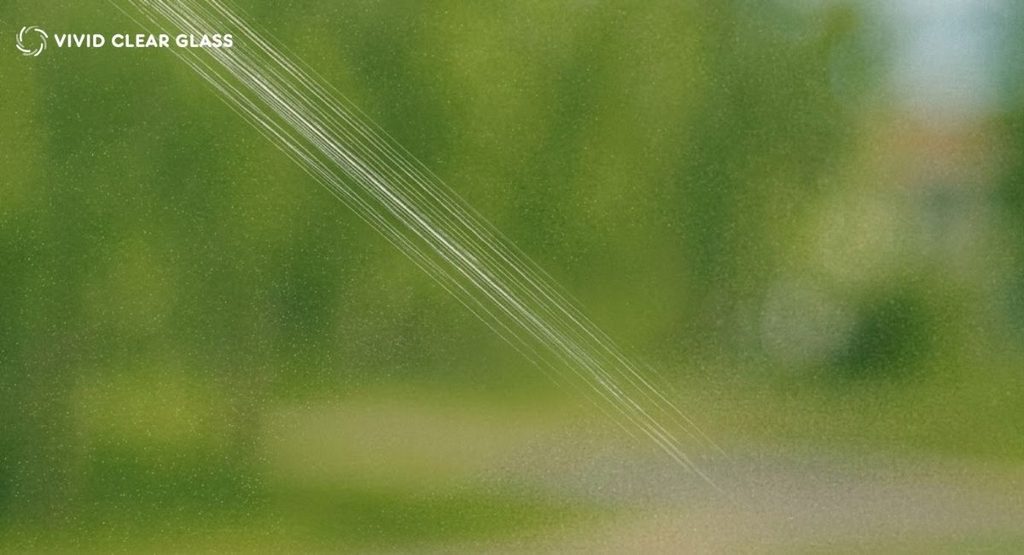
Fine scratches often appear as thin lines that catch the light. They may result from routine cleaning, contact with small abrasive particles, or minor surface abrasion.
Fine scratches often appear as thin lines that catch the light. They may result from routine cleaning, contact with small abrasive particles, or minor surface abrasion.
If the glass is otherwise in good condition, controlled polishing may improve the appearance.
Before proceeding, confirm that the marks are genuine scratches rather than deposits. Also check whether the glass has a coating that could be affected by polishing.
The goal is to improve clarity without creating a visible difference between the treated and untreated areas.
Moderate Scratches: Professional Assessment Is Important
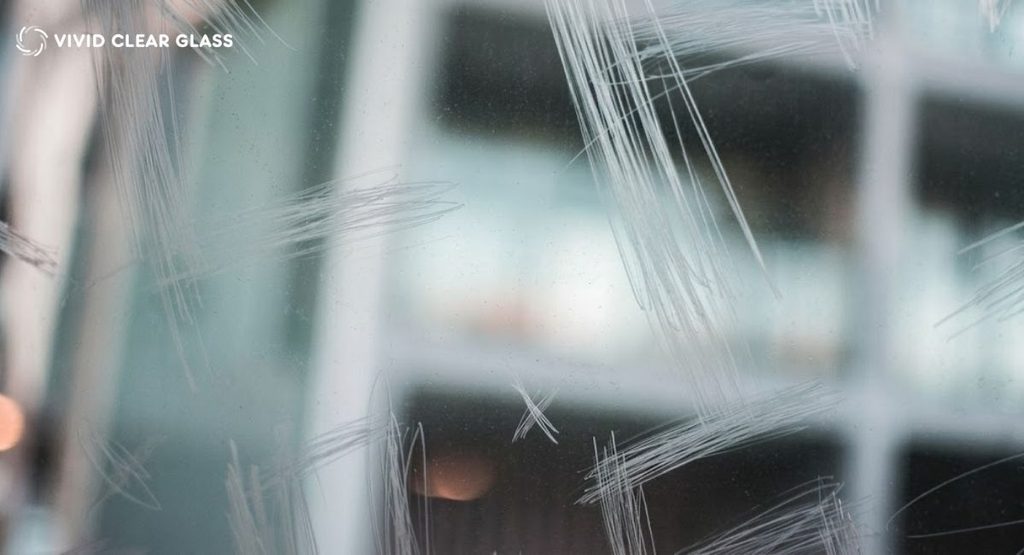
Moderate scratches are easier to see and may catch a fingernail slightly. Some may be suitable for professional polishing, depending on their depth and distribution.
The size of the damaged area matters. A single short scratch may be easier to address than a broad patch containing many overlapping marks.
A technician should assess how much material removal would be required and whether the finished surface would remain visually uniform.
For large windows, it is especially important to consider how the repaired area will look from a normal viewing distance.
Deep Scratches: Compare Restoration With Replacement
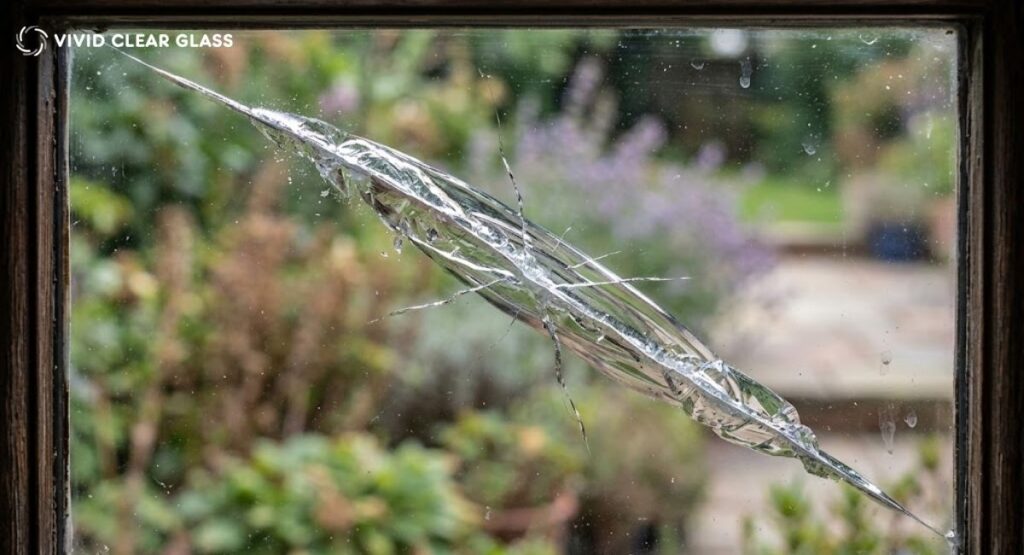
Deep scratches have a more pronounced groove and may catch a fingernail clearly. They can be caused by abrasive construction debris, unsuitable tools, or other forms of physical contact.
Removing a deep scratch may require extensive polishing. This can change the surface profile and cause visible distortion.
In these cases, a technician may recommend reducing the appearance of the damage rather than attempting complete removal. Replacement may be the better option when the required finish cannot be achieved safely.
Methods for Removing Scratches From Window Glass
The correct method depends on whether the mark is a deposit, a shallow scratch, or deeper damage. Start with the least aggressive approach and avoid treatments that are unsuitable for the glass.
Method 1. Remove Dirt and Mineral Deposits
Before attempting glass scratch removal, make sure the mark is not caused by dirt, paint, or mineral deposits.
Use a compatible glass cleaner and a soft cloth. Rinse away loose particles before wiping, then inspect the surface once it is dry.
Hard-water deposits can leave cloudy spots and rough-looking marks. These deposits require a different treatment from scratches in the glass itself.
If mineral buildup is the problem, a suitable cleaning or restoration process may improve the appearance without abrasive scratch polishing.
For persistent deposits, consider professional water stain removal services.
Do not assume that every mark can be scraped away. Blades and abrasive pads may damage coatings or introduce new scratches.
Method 2. Use Cerium Oxide for Suitable Surface Damage
Cerium oxide is a polishing compound used in glass restoration. When applied with suitable equipment, it can help correct certain shallow scratches and surface imperfections.
The compound is not a universal solution for every scratch.
Successful polishing requires control over pressure, movement, friction, and the amount of glass removed. Working too aggressively in one area can create an uneven surface.
A typical professional process involves the following stages:
- Inspect and clean the affected surface.
- Confirm that the glass is suitable for polishing.
- Select an appropriate polishing compound and pad.
- Work the damaged area using controlled equipment.
- Inspect the result for remaining marks and optical distortion.
The exact process varies according to the glass and the damage.
DIY polishing kits are available, but the result depends on the equipment, surface condition, and user’s experience. A mistake can leave haze, circular marks, or distorted reflections.
For a large storefront, coated window, or prominent glass panel, professional assessment is generally the safer starting point.
Method 3. Arrange Professional Glass Restoration
Professional restoration is worth considering when the damage affects an expensive or highly visible window.
A technician can assess the scratch depth, glass type, surface coating, and likely repair outcome. This helps determine whether polishing is suitable or whether another option would provide a better result.
A professional may recommend:
- Polishing the scratch if the damage is suitable.
- Reducing the visibility of the mark if complete removal is impractical.
- Replacing the pane if restoration would leave unacceptable distortion or the glass has other damage.
Ask what result you can reasonably expect before work begins. It is also useful to ask whether a test area can demonstrate the likely finish.
For property owners who need a tailored assessment, Vivid Clear Glass custom glass restoration is a relevant service to consider.
Method 4. Replace the Pane When Repair Is Not Practical
Sometimes replacement is the more sensible decision.
A deep scratch may require too much polishing to remove without affecting the surface. A large damaged area may also be difficult to blend into the surrounding glass.
Replacement deserves consideration when:
- The scratch is deep and highly visible.
- Polishing is likely to create optical distortion.
- A coating or inaccessible glass surface is damaged.
- Cracks, chips, or other damage raise safety concerns.
- The required visual finish cannot be achieved through restoration.
The decision should account for the cost of the new glass, installation, access, and potential disruption.
For commercial properties, replacement may require careful scheduling to reduce disruption to customers and staff. A professional can help compare the practical implications of both options.
Why DIY Scratch Removal Can Cause More Damage
Glass is not like wood or plastic. Removing a scratch often requires altering the surrounding surface, and that process needs careful control.
Toothpaste and Household Abrasives Are Not Reliable Fixes
Toothpaste, baking soda, and household scouring products are often suggested as inexpensive scratch removers.
These methods cannot reliably remove genuine scratches from window glass. A product may clean the surface or affect a very superficial mark, but deeper damage generally requires a more controlled process.
Repeated rubbing can also create an uneven finish or make the damaged area more noticeable.
If cleaning does not remove the mark, avoid increasing pressure or switching to a rougher abrasive without confirming that the method is suitable.
Excessive Polishing Can Distort Reflections
Glass polishing removes a small amount of material from the surface. If the process removes more material from one area than another, it can create an uneven profile.
This may cause:
- Bent or wavy reflections.
- Cloudy patches.
- Circular polishing marks.
- Uneven visibility through the glass.
- A repair area that stands out under direct sunlight.
These effects can be especially noticeable on large commercial windows.
The aim is not simply to eliminate the original scratch. The finished glass should also maintain acceptable visual quality.
Rough Pads and Metal Tools Can Create New Scratches
Steel wool, abrasive cleaning pads, and unsuitable blades can damage glass surfaces. Trapped grit may cause further abrasion as the tool moves across the window.
Some specialist cleaning methods are appropriate for specific types of glass, but they should not be applied indiscriminately.
Use soft, clean tools and products that are compatible with the glazing. If you are uncertain about the surface, seek advice before attempting aggressive cleaning.
Can Deep Scratches Be Polished Out of Glass?
Some deep scratches can be reduced, but complete removal may not be practical.
The main issue is how much glass must be removed to level the damaged area. A deeper groove can require more extensive polishing, which increases the chance of optical distortion.
When Deep Scratch Repair May Be Worth Considering
A professional may consider polishing when the scratch is isolated, the glass is suitable for treatment, and the expected finish meets the property’s requirements.
The assessment should include the depth, length, location, glass thickness, surface coating, and viewing conditions.
A short scratch on a small pane presents a different challenge from a long groove across a large storefront window.
The technician should also explain whether some visibility may remain after treatment.
When Replacement Is the More Practical Choice
Replacement may be preferable when removing the scratch would require extensive material removal or create an obvious change in the surface.
It should also be considered when the pane has cracks, chips, or other damage that could affect its performance.
Surface damage can act as a stress concentration in glass. The effect depends on the depth and location of the damage and the type of glazing. A deep scratch should therefore not be treated as a cosmetic issue without considering the condition of the pane.
Not every scratch makes glass unsafe, but deeper damage warrants a suitable assessment before polishing.
Can Tempered Glass Be Polished?
Tempered glass is heat-treated to increase its strength and change how it breaks. Because its surface condition is important to its performance, scratch removal requires particular care.
Why Tempered Glass Needs a Different Assessment
Tempered glass contains internal stresses created during the manufacturing process. Abrasive work removes material from the surface and may affect the glass if it is performed incorrectly.
There is no single polishing limit that applies to every tempered glass product. The appropriate approach depends on the specific pane, its condition, and its intended use.
Do not assume that thick tempered glass can withstand aggressive polishing.
What About Laminated and Double-Glazed Windows?
Laminated glass contains layers joined by an interlayer. Double-glazed windows have separate panes with a sealed space between them.
A scratch may be located on an accessible surface or on a surface inside the unit. If the damage is inside a sealed unit, polishing the outside will not reach it.
Coated glass presents another concern. An abrasive treatment may damage the coating and reduce the window’s intended performance.
Before choosing a repair method, identify the glass type and the surface where the damage is located.
For railings and other safety-critical installations, have the glass assessed before attempting any abrasive work. Vivid Clear Glass also provides glass railing restoration services for suitable restoration needs.
Glass Scratch Removal vs. Replacement
The best option depends on the expected finish, the severity of the damage, and the cost of the work.
| Consideration | Scratch removal | Glass replacement |
|---|---|---|
| Suitable damage | Selected surface scratches | Deep damage or unsuitable repairs |
| Effect on existing glass | Removes a controlled amount of surface material | Replaces the affected pane |
| Appearance | Depends on the depth and polishing result | Can provide a uniform new surface when correctly specified |
| Cost | Depends on labor, access, and damage size | Includes glass, fabrication, and installation |
| Main concern | Visible distortion or remaining marks | Higher upfront cost and installation disruption |
How to Decide Which Option Offers Better Value
Restoration may be more economical when the scratch is shallow and polishing can produce a suitable finish.
Replacement may be better value when the damage is deep, the affected area is large, or the glass needs to meet a high visual standard.
For example, a storefront with several fine scratches may be a good candidate for professional polishing if a test area shows a clear improvement without distortion.
A window with a deep groove across the main viewing area presents a different challenge. If polishing would leave a visible wave, replacing the pane may provide a better result.
Compare the expected outcome rather than choosing solely on the initial price.
An Example of Scratch Repair for a Commercial Storefront
Consider a retail property with several visible scratches across its front window. The marks become more noticeable in sunlight and affect the appearance of the display.
The property manager initially considers replacing the pane. Before making that decision, the manager requests an assessment.
Before the Work
The technician cleans the glass and checks whether the marks are surface deposits or genuine scratches. The inspection also considers the glass type, the depth of the damage, and the viewing conditions.
The initial findings suggest that some marks may be suitable for polishing.
During the Assessment
Rather than immediately polishing the entire window, the technician evaluates a small test area where appropriate.
The purpose is to check whether the treatment improves the appearance without creating haze or distorted reflections.
If the test result is acceptable, the proposed restoration can proceed within the agreed scope.
After the Work
The property manager should inspect the result from several angles and under different lighting conditions.
A successful outcome should improve the appearance while maintaining an acceptable view through the window. Complete removal of every mark should not be promised unless the assessment supports that expectation.
If polishing creates visible distortion, the repair plan should be reconsidered.
The lesson for property managers is straightforward. Assess the damage, confirm the likely outcome, and compare restoration with replacement before committing to a costly decision.
What Determines the Cost of Glass Scratch Removal?
Glass restoration costs vary according to the work required. A small surface scratch on an accessible pane is different from a deep gouge across a large commercial window.
Main Factors That Affect the Estimate
Depth of the scratch. Shallow damage may require less work. Deep scratches may need extensive treatment or may not be suitable for polishing.
Size of the affected area. The technician must consider both the length of the scratch and the area that needs treatment.
Type of glass. Tempered, laminated, insulated, and coated glass can require additional assessment or specialized methods.
Access to the window. Upper-floor glazing, large facades, and restricted work areas may increase labor and access costs.
Required appearance. A prominent storefront or reception area may need a higher visual standard than a less visible window.
Replacement requirements. If restoration is unsuitable, the cost will depend on the pane specification, fabrication, access, and installation.
Questions to Ask Before Accepting a Quote
Ask the provider to explain the proposed treatment and its limitations. The estimate should identify the affected area and clarify whether polishing, partial improvement, or replacement is recommended.
You should also ask whether a test area is possible, how the result will be inspected, and what happens if polishing causes visible distortion.
For commercial buildings, confirm the expected schedule and any access requirements.
Comparing a restoration quote with a replacement quote can help you make a more informed decision.
How to Reduce the Risk of Future Window Scratches
Prevention can reduce repair costs and help preserve the appearance of glass over time.
Choose Suitable Cleaning Materials
Use clean microfiber cloths, soft applicators, and compatible cleaning products.
Rinse away loose dirt before wiping. Sand, construction dust, and metal particles can scratch the surface when trapped in a cloth.
Avoid dry scrubbing and rough pads unless the glass manufacturer specifically approves the method.
Take Care During Renovation Work
Paint, cement, plaster, and other construction materials can become difficult to remove if left on glass.
Protect windows during renovation and use cleaning methods appropriate for the glazing. Do not scrape away dried residue without confirming that the method is safe for the surface.
Inspect the glass after construction work so that any damage can be assessed early.
Give Cleaning Teams Clear Instructions
Commercial property managers should explain which tools and products are permitted.
Cleaning contractors should know whether windows have special coatings or other surface treatments. A tool that works on one type of glass may damage another.
Routine inspections can also help identify scratches before they spread across a larger area or become more noticeable.
Treat Water Deposits Before They Become Stubborn
Sprinkler overspray and mineral-rich water can leave deposits that make windows appear scratched or cloudy.
Where possible, redirect sprinklers away from the glass and clean deposits using a compatible method.
If the surface remains cloudy after cleaning, seek advice before using abrasive products. The problem may be mineral buildup rather than a scratch.
Frequently Asked Questions Windows Glass Scratch Repair
Can scratches be removed from window glass completely?
Some shallow scratches can be removed through controlled polishing. Deeper scratches may only be reduced, while others are unsuitable for polishing. The result depends on the damage, glass type, and risk of distortion.
How do you get scratches out of glass windows without replacing them?
Clean the surface first to rule out dirt and deposits. If the mark is a genuine scratch, professional polishing may improve it when the glass is suitable for treatment.
Does toothpaste remove scratches from glass?
Toothpaste is not a reliable method for removing genuine scratches in window glass. It may clean the surface, but it cannot be expected to remove deep damage.
Does cerium oxide work on window scratches?
Cerium oxide can help remove certain shallow surface imperfections when used with suitable equipment. It cannot guarantee removal of every scratch, and unsuitable polishing can cause distortion.
Is it safe to polish tempered glass?
Tempered glass needs careful assessment before abrasive treatment. Improper polishing can affect the surface and compromise performance. A qualified professional should assess the pane before work begins.
Can scratches make a window weaker?
Some surface damage can affect glass strength, depending on its depth and location. A scratch does not automatically make a window unsafe, but deep scratches, chips, and cracks should be assessed.
How can I tell a scratch from a water stain?
Clean the surface using a compatible product and inspect it under angled light. Mineral deposits may leave cloudy marks, while scratches are physical surface damage. Persistent deposits may need specialized cleaning rather than polishing.
Is scratch removal cheaper than replacing glass?
It can be cheaper when the damage is suitable for polishing. The total cost depends on the scratch, the glass type, access, and the finish required. Replacement may offer better value if polishing would leave visible distortion.
Can scratches on storefront windows be repaired?
Some storefront scratches can be treated professionally. The technician must assess the depth, glass type, and required visual quality before recommending restoration.
Get Your Scratched Windows Assessed
Scratched window glass does not always need to be replaced. Fine surface marks may respond to polishing, while deep grooves and damage to specialty glass require more careful consideration.
The best first step is to identify the type and depth of the damage. Avoid aggressive DIY treatments that could leave cloudy patches or distort the glass. Then compare the likely restoration result with the cost and benefits of replacement.
For professional guidance, Vivid Clear Glass can help assess suitable glass restoration options for residential and commercial properties.
Visit Vivid Clear Glass to review available services, or contact the team to discuss your window scratches and determine the next practical step.