
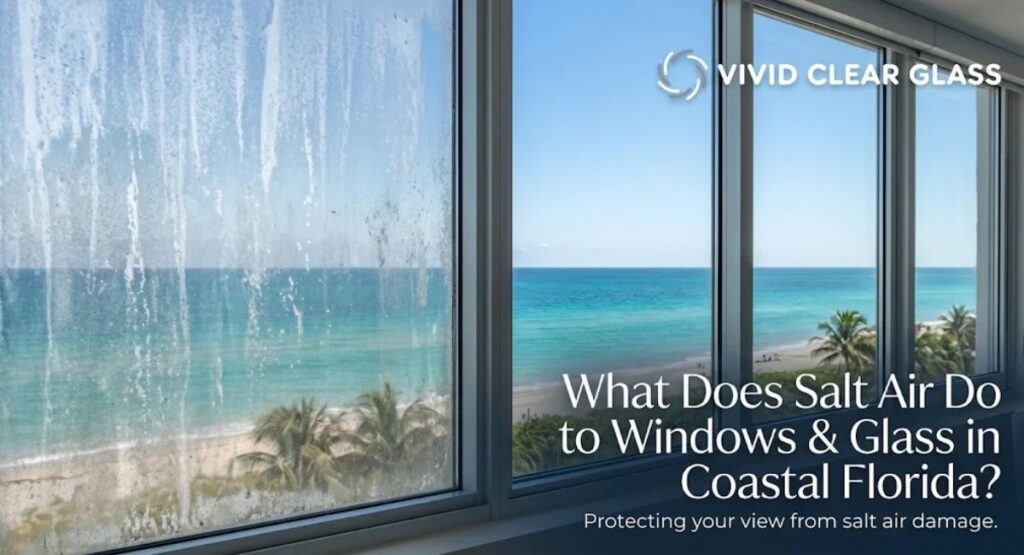
You wash your windows on Saturday. By Wednesday, a cloudy film is back. The glass feels slightly sticky. The frame has white crust in the corners.
If you live near the water in Miami, this is familiar. The ocean looks great from your balcony. It also sends salt through the air every day. That salt lands on your glass, your frames, your railings, and your hardware.
So what does salt air do to windows? Short term, it leaves film, spots, and streaks. Long term, it can corrode metal, wear down seals, and make glass harder to clean. The damage is slow. It is also easy to miss until it becomes costly.
This guide explains how salt air affects windows and glass in coastal Florida. It covers what happens on the glass, what happens to frames and hardware, and which warning signs matter. You will also get a practical plan for prevention. For homeowners who want lasting coastal glass protection, the right habits make a real difference.
How Salt Gets onto Your Windows
Salt does not only stay at the beach. It moves with wind and moisture, and it travels farther than most people expect.
Sea Spray and Salt Aerosols
Waves break and bubbles burst at the surface of the Atlantic Ocean. Tiny droplets rise into the air. These droplets carry sea salt, mainly sodium chloride, along with other minerals. Scientists call them sea spray aerosols. The National Oceanic and Atmospheric Administration (NOAA) shares research on ocean and coastal processes through the National Ocean Service.
Wind carries these droplets onshore. Heavier ones fall close to the water. Lighter ones can drift inland. Areas like Miami Beach, Key Biscayne, and Sunny Isles sit in the direct path.
Wind Direction and Weather
Salt levels change with the weather. Onshore winds bring more salt. Storms and strong fronts can push heavy spray across barrier islands and into coastal neighborhoods.
After a tropical storm or hurricane, salt can coat every exposed surface. Windows facing the water take the worst of it.
Humidity Helps Salt Stick
Miami has high humidity for much of the year. Salt absorbs water from the air. This makes it sticky. A damp salt film grabs dust, pollen, and pollution. Together they form a gray, cloudy layer.
When the sun comes out, the water evaporates. The salt dries into crystals or a white crust. The cycle repeats day after day.
What Salt Air Does to Glass
Glass is a durable material. It resists many chemicals. Even so, salt exposure creates problems on the surface.
Cloudy Film and Haze
Salt film is the first sign. It looks like a light haze. It scatters sunlight and blurs your view. Water spots and dirt add to the effect.
In the early stage, a good rinse and wash removes it. The film is not part of the glass. It sits on top.
Salt Crystals and White Spots
When salt water dries on glass, it leaves crystals and spots. These marks often appear on lower panes and doors, where spray and splashes land. Sprinkler overspray adds minerals that make marks more stubborn.
Fresh spots wipe off with water and mild soap. Older spots can bond to the surface.
Hard Water-Type Staining
Sea salt contains more than sodium chloride. It includes magnesium, calcium, and other minerals. When these dry repeatedly in the same spot, they can leave deposits that behave like hard water stains. Rings and patches may remain after a normal wash.
You can read more in our guide on how to remove hard water stains from glass. It explains why timing matters.
Scratches from Wiping Dry Salt
Salt crystals are hard and gritty. If you wipe a dry, salty window with a cloth, the crystals drag across the surface. They can leave fine scratches. Over time, these show up as swirl marks in the sun.
Always rinse first with fresh water. Then wash.
Can Salt Etch Glass?
This is a common question. Salt alone does not usually dissolve window glass quickly. Standard window glass resists plain salt water well in the short term.
The risk grows when salt combines with other factors:
- Long periods of moisture on the surface
- Alkaline or mineral-rich water that dries repeatedly
- Abrasive grit mixed in with the salt
- Strong sun that bakes deposits onto the glass
Under those conditions, the surface can become dull or rough. This is often called etching or surface wear. Results vary by glass type, exposure, and how long deposits stay in place.
What Salt Air Does to Window Frames and Hardware
Often, the frame fails before the glass does. Metal parts face the most risk from salt.
Why Chloride Is Hard on Metal
Salt contains chloride ions. Chloride attacks the protective oxide layer that forms on many metals. When moisture is present, corrosion can start.
This process is faster in warm, humid places. Miami offers both.
Aluminum Frames
Aluminum is common in Florida windows and doors. It resists rust, but it can still corrode. Salt can cause pitting, white powder, and bubbling under paint or finish.
Anodized and powder-coated finishes add protection. Scratches in the finish expose bare metal. Salt then goes to work in those weak spots.
Stainless Steel Hardware
Stainless steel is not stainless in all conditions. Common grades such as 304 can show surface rust or brown staining near the ocean. Grade 316 contains molybdenum and performs better in marine areas.
This matters for hinges, locks, rollers, clamps, and fasteners. It also matters for glass railings, where hardware holds the panels in place.
Rollers, Tracks, and Locks
Sliding doors collect salt and sand in their tracks. The rollers grind against grit. Locks can stiffen. Doors may start to stick or drag.
Clean tracks often. A small brush and mild soapy water do the job.
Galvanic Corrosion
When two different metals touch in a wet, salty setting, one can corrode faster than the other. This is galvanic corrosion. A steel screw in an aluminum frame is a common example.
Quality installers use compatible fasteners and isolators. Ask about this if you replace hardware.
What Salt Air Does to Seals, Gaskets, and Sealants
Salt rarely works alone. Sun, heat, and moisture also wear on rubber and sealant materials.
Gasket and Sealant Wear
Rubber gaskets can harden, crack, or shrink with age. Salt residue holds moisture against them. UV exposure speeds up the damage.
Cracked gaskets let water in around the glass. Over time, this may lead to leaks, mold, and damage to the wall nearby.
Insulated Glass Seal Failure
Many windows are double-pane units. Their edge seals keep moisture out of the space between the panes. When a seal fails, moisture gets in. You may see fog or droplets inside the glass that you cannot wipe away.
Salt does not cause every seal failure. Heat, age, and installation quality also matter. Still, a harsh coastal setting adds stress.
Weep Holes and Drainage
Window frames have small weep holes that let water drain. Salt crust, sand, and dirt can clog them. Water then sits in the frame and speeds up corrosion.
Check these openings each month. Clear them gently with a soft tool.
What Salt Air Does to Glass Railings and Balcony Panels
Balcony glass sits fully exposed to wind and spray. It may look clean from far away and still carry heavy film up close.
Film and Haze on Railings
Railing glass gets coated by salt on all sides. Sun hits it all day. Deposits dry fast and bond.
Look for hazy patches near the bottom edge. Water tends to collect there.
Hardware Corrosion
Spigots, clamps, handrails, and base shoes often use stainless steel or aluminum. Salt can cause rust spots and pitting. Weak hardware can become a safety issue. If you see rust bleeding, loose fittings, or wobbling panels, call a professional.
Restoration Options
Dull or stained railing glass may respond to professional treatment. Our glass railing restoration service in Miami targets haze, mineral stains, and surface wear on balcony and pool glass. It can bring back clarity when routine washing no longer works.
Early Warning Signs of Salt Damage
Spot damage early. It saves money.
On the Glass
- Haze that returns within days of cleaning
- White or gray spots that stay after washing
- Rough texture when you run a clean hand across the glass
- Fine swirl marks seen in low sun
- Rainbow-like tint or cloudy patches
On Frames and Hardware
- White powder or bubbling paint on aluminum
- Rust or brown streaks near screws and clamps
- Stiff handles, locks, or sliding rollers
- Loose fittings or rattling panels
On Seals and Gaskets
- Cracked, hard, or shrunken rubber
- Gaps in caulk around the frame
- Fog or moisture between double panes
- Water stains on sills or nearby walls
If you spot several of these signs, schedule an inspection.
Salt Exposure by Property Type in Miami
Exposure varies a lot across the city. Use this table to gauge your risk.
| Property Type | Typical Salt Exposure | Main Concerns |
|---|---|---|
| Oceanfront home or condo | Very high | Heavy film, hardware corrosion, railing haze |
| Bayfront or Intracoastal home | High | Salt mist, moisture, mold on frames |
| Within 1 to 2 miles of the coast | Moderate | Regular film, spots, track buildup |
| Inland neighborhoods | Lower | Dust, humidity, sprinkler spots |
| High-rise balconies | High | Wind-driven spray, railing glass, hardware |
Exposure also depends on wind patterns, nearby buildings, and tree cover. A sheltered courtyard may see less than an open balcony on the same block.
How to Protect Windows from Salt Air
You cannot stop salt in the air. You can reduce what it does. Good habits and the right products help.
Rinse with Fresh Water
Salt dissolves in fresh water. A simple rinse with a garden hose removes much of the surface salt. Do this every one to two weeks if you live close to the ocean.
Use a gentle spray. Avoid high pressure near seals.
Wash on a Regular Schedule
A full wash removes film that rinsing misses. Use mild dish soap, warm water, and a microfiber cloth. Squeegee from top to bottom. Dry the edges.
For timing by location and season, see our guide on how often to clean windows in Florida.
Clean Frames, Tracks, and Hardware
Wipe the frame with each wash. Brush sand and salt out of the tracks. Clear weep holes. Rinse hinges, locks, and clamps.
A light coat of marine-grade lubricant on moving parts may help. Check the manufacturer’s advice first.
Use Soft Tools Only
Microfiber, soft brushes, and clean squeegee blades protect the surface. Skip steel wool, abrasive pads, and dry wiping.
Keep Sprinklers Off the Glass
Sprinkler water adds minerals to the salt problem. Adjust spray heads so they miss windows and doors. Our guide on how to remove sprinkler water stains from windows shows how to handle spots that have already formed.
Check Seals Twice a Year
Look over caulk, gaskets, and sealants in spring and fall. Replace damaged material early. Small gaps become leaks fast.
Inspect Finishes
Touch up chipped paint or finish on frames. Bare metal corrodes first. Fixing small chips early prevents larger repairs later.
Rinse After Storms
After any strong wind or tropical system, rinse the glass and frames. Salt that sits for days is harder to remove.
Protective Coatings for Coastal Glass
Coatings can reduce how well salt and dirt hold on to the surface.
How Ceramic and Nano Coatings Work
A ceramic or nano coating forms a thin, slick layer on clean glass. Water beads and rolls off. Salt, dust, and minerals have less grip. Rinsing becomes more effective, and cleaning takes less effort.
Coatings do not make glass maintenance-free. You still need to wash it. The gain is easier cleaning and less buildup between washes.
Where Coatings Make the Most Sense
- Oceanfront windows and sliding doors
- Balcony and pool railing glass
- Shower doors in humid bathrooms
- Glass that faces sprinklers or heavy spray
Prepare the Glass First
A coating should go on clean, undamaged glass. Stains and etching must be treated first, or the coating will lock in the flaws.
Our ceramic nano coating in Miami service starts with surface prep. This helps the coating bond and last. Coating life varies by product, exposure, and care, so ask for clear expectations before you book.
Salt Air and Impact Windows
Many Miami homes use hurricane impact glass. It is laminated, with a strong layer between two panes. The glass still faces the same salt exposure as any other window.
Use gentle methods. Avoid abrasives and harsh chemicals. If your windows have a film or coating, check the care instructions before using any new product. Our guide on how to clean hurricane impact windows safely covers tools, products, and common mistakes.
When Regular Cleaning Is Not Enough
Some damage goes beyond the surface. Cleaning products will not fix it.
Stubborn Stains
If rings or patches stay after you wash, minerals may have bonded to the glass. Professional water stain removal uses controlled methods that protect the surface.
Hardware and Frame Problems
Pitted metal, heavy rust, or loose fittings need repair or replacement. Ask a qualified window or railing technician. Do not ignore hardware near balconies and stairs.
Seal Failure
Fogged double-pane units usually need a new glass unit. Cleaning will not clear moisture between the panes.
Real Examples from Coastal Homes
Three short scenarios show how salt air plays out.
The Beachfront Condo
An owner on Miami Beach cleans the balcony glass once a month. A cloudy film still builds up between washes. The owner starts rinsing weekly with fresh water and adds a quarterly deep clean. The film stays light. Hardware gets a rinse each time.
The Bayfront Home
A homeowner in a bayside neighborhood notices dark specks on frames and tracks. Moist salt air and shade create mold. Regular brushing and a mild cleaner keep it in check. Clearing weep holes stops water from pooling.
The Inland Home with Sprinklers
A family a few miles from the coast sees white spots on lower windows. Salt is part of the cause. Sprinklers are the bigger one. Adjusting the heads stops new spots. A pro treats the older marks.
A Simple Maintenance Plan for Coastal Properties
Use this plan as a base. Adjust it for your location.
| Task | Oceanfront | Near Coast | Inland |
|---|---|---|---|
| Fresh water rinse | Weekly | Every 2 weeks | Monthly |
| Full glass wash | Every 2 to 4 weeks | Every 4 to 6 weeks | Every 2 to 3 months |
| Frame and track cleaning | Monthly | Every 1 to 2 months | Quarterly |
| Seal and hardware check | Every 3 months | Every 6 months | Every 6 months |
| Professional inspection | Yearly | Yearly | Every 2 years |
Write the dates in your calendar. A steady routine beats a big clean-up once a year.
Your Questions, Answered
How does salt air affect windows?
Salt air leaves a sticky film on glass, forms crystals as it dries, and can corrode metal frames and hardware. Over time, it can also wear on seals and make glass harder to clean.
Why does salt build up on windows near the ocean?
Wind carries sea spray inland. The droplets land on glass and dry in the sun. Humidity keeps the salt damp and sticky, which attracts more dirt.
Does salt air damage glass?
Salt rarely harms glass quickly. The bigger risks are surface film, scratches from wiping dry salt, and mineral deposits that bond over time. Frames and hardware usually suffer more.
How far inland does salt air reach?
It depends on wind and weather. Heavy spray settles near the shore. Lighter salt aerosols can travel farther inland, especially during storms.
How do I remove salt from windows?
Rinse with fresh water first. Wash with mild soap and a microfiber cloth. Squeegee and dry the edges. Do not wipe dry salt.
How often should I clean windows near the ocean?
Oceanfront glass often needs washing every two to four weeks, with a weekly fresh water rinse. Homes farther from the coast can clean less often.
Can salt corrode aluminum window frames?
Yes. Chloride can cause pitting and white powder on aluminum, especially where the finish is scratched or worn.
Do coatings help against salt air?
They can. A ceramic or nano coating helps water and salt release more easily. You still need regular cleaning.
How do I protect glass railings from salt?
Rinse often, wash on a schedule, and check stainless hardware for rust. Consider a coating on clean glass. Call a pro if you see wobble or heavy corrosion.
Small Habits Prevent Big Repairs
Salt air is part of life in coastal Florida. It will reach your windows, frames, and railings. Frequent rinsing, soft cleaning, and regular checks keep the damage small. Protective coatings can make that routine easier.
Start with what you see. Look for haze, spots, white crust, rust, and sticky tracks. Fix small issues early. Bring in a specialist when stains will not lift or hardware looks weak.
Need help with salt-damaged glass in Miami? Contact Vivid Clear Glass for stain removal, glass railing restoration, and protective coatings built for coastal conditions. View all glass services at vividclearglass.com and book an assessment today.