
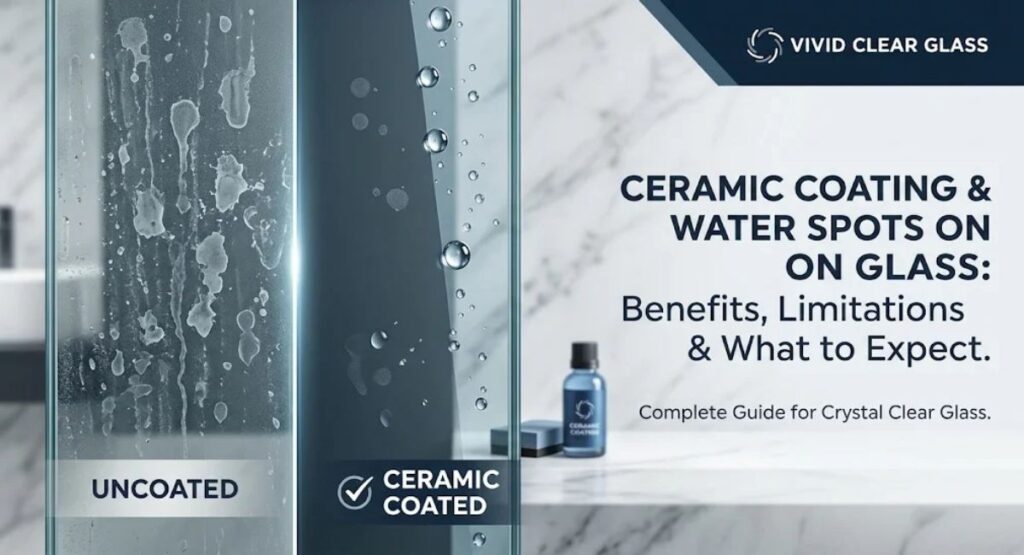
You are thinking about coating your glass. You want to stop the white spots that keep coming back on your shower door, sliding doors, or balcony railing. The sales pitch says water will bead up and roll off. It sounds simple.
Then a friend says, “My coated glass still gets spots.” Who is right?
Both. Ceramic coating can reduce water spots a lot. It cannot stop every one. The coating changes how water behaves on the glass. It does not change the minerals in the water. Those minerals still dry on the surface when water sits long enough.
This guide gives you a straight answer. It explains how ceramic coating works, what it prevents, what it does not, and what to expect in Miami conditions. You will also see how to care for coated glass and when to call a pro. If you want lasting glass surface protection, set the right expectations first.
The Short Answer
Ceramic coating does not fully prevent water spots on glass. It reduces them. It also makes spots easier to remove.
Here is why. The coating is hydrophobic, which means water repellent. Water forms beads and slides off. Less water stays on the surface. Less water means fewer minerals left behind.
But some droplets still cling, especially in corners, on flat panes, and on spots where the coating is thin or worn. When those droplets dry, minerals remain. Coated glass can still show spots. They are usually lighter and wipe off faster.
What Is a Ceramic Coating for Glass?
A ceramic coating is a thin liquid layer that bonds to the glass. Many products use silicon dioxide (SiO2), the same base material found in glass. Others use related silane or siloxane compounds. These are often sold as ceramic nano coatings or hydrophobic glass coatings.
How It Bonds
The liquid is applied to clean glass. It reacts with the surface and cures. It forms a thin, slick layer that is much smaller than the width of a human hair. You cannot see it once it cures.
Coatings made for glass differ from those made for car paint. Glass has a different surface. Products should be made and tested for window use.
Hydrophobic vs. Hydrophilic
A hydrophobic surface repels water. Drops bead and roll. A hydrophilic surface attracts water. Water spreads in a thin sheet.
Bare glass is slightly hydrophilic. It holds a film of water. That film dries and leaves mineral marks. A hydrophobic coating changes the surface so water does not spread as much.
What Is Contact Angle?
Contact angle is how scientists measure water behavior on a surface. It is the angle where a droplet meets the glass. A high angle means a tall, round bead. A low angle means a flat spread.
Higher angles usually mean better water repellency. Over time, wear and dirt lower the angle. That is one sign a coating is fading.
What Causes Water Spots on Glass?
To see what a coating can and cannot do, you need to know what a water spot is.
Minerals Left Behind
Water in many homes contains dissolved minerals such as calcium and magnesium. The U.S. Geological Survey explains how water hardness forms and why it varies by location. When water dries on glass, the water leaves. The minerals stay.
That white or gray mark is a water spot.
Common Sources in Miami
- Sprinkler overspray on lower windows and doors
- Rain mixed with dust and salt
- Pool splash on enclosures and railings
- Shower and bath water on interior glass
- Condensation from AC on cool glass
Salt air adds to the problem. Sea salt contains minerals of its own. See our guide on how salt air affects windows for details.
Heat Speeds the Process
Florida sun dries water fast. Quick drying leaves little time to wipe or rinse. Spots bond faster on hot glass.
Spots vs. Etching
Fresh spots sit on top of the glass. They wipe off with the right method. Old spots can bond. In some cases, minerals and moisture wear the surface and cause etching. Etching is damage in the glass itself.
This difference matters. A coating helps prevent new spots. It does not repair existing damage.
How Ceramic Coating Helps Prevent Water Spots
Coatings work in several ways.
Better Water Beading and Sheeting
Water forms beads and rolls off with the slightest tilt or wind. On vertical glass, many drops leave before they dry. This cuts down on mineral residue.
Less Water Stays on the Surface
With less water clinging, there is less to dry. Fewer droplets mean fewer spots.
Weaker Grip for Minerals and Dirt
The slick surface gives dirt and minerals less to hold onto. When deposits do form, they often sit loosely. A soft cloth and mild cleaner can remove them.
Easier Cleaning
This is the biggest benefit for most homeowners. Coated glass often cleans with less rubbing. Rinsing alone can remove much of the surface salt and dust.
Some Protection from Staining
A coating acts as a barrier between the glass and contaminants. It can slow the bond between mineral deposits and the surface. It is not a shield against all damage.
What Ceramic Coating Cannot Do
Honest expectations matter. Here are the limits.
It Does Not Make Glass Spot-Proof
Water can still dry on coated glass. Droplets that stay in place will leave minerals. This happens most in sprinkler zones and on flat or slightly sloped glass.
It Does Not Fix Existing Damage
Stains, etching, and scratches stay under the coating. They may even look worse once the glass is treated, since a coating can highlight flaws. The glass must be repaired first.
It Does Not Stop Scratches
A coating is thin. It adds slight surface hardness in some products. It will not protect against sharp tools, grit, or rough pads. Our guide on whether you can repair scratched glass guide explains what is possible after damage.
It Does Not Last Forever
Wear, cleaning habits, and weather reduce coating life. In Miami, sun and salt are tough on any surface layer. Durability depends on the product, the prep work, and your care routine.
It Does Not Replace Cleaning
Coated glass still needs washing. The routine gets easier. It does not disappear.
It Does Not Stop Sprinklers
Sprinkler water often carries heavy minerals. If sprinklers hit your glass every day, spots will return. Fix the spray angle. Read our guide on how to remove sprinkler water stains from windows for help with existing marks.
Can Water Spots Form on Coated Glass?
Yes. Here is when it happens.
- Beads dry in place. Small beads in shaded or low-wind areas may not roll off. They dry and leave a dot.
- The coating has worn. Thin areas lose repellency first. Spots show up there.
- Hard water hits repeatedly. Daily sprinkler spray overwhelms the coating.
- The glass was not prepped well. Contaminants under the coating prevent proper bonding.
- Cleaning products leave residue. Some soaps and waxes cover the coating and reduce beading.
The good news is that spots on coated glass are often easier to remove. A damp microfiber cloth may be enough.
Coated Glass vs. Uncoated Glass
This table shows what changes with a coating.
| Feature | Uncoated Glass | Coated Glass |
|---|---|---|
| Water behavior | Spreads in a film | Beads and rolls off |
| Spot formation | Frequent | Less frequent, but still possible |
| Spot removal | Often needs scrubbing | Often wipes off more easily |
| Cleaning effort | Higher | Lower |
| Salt and dust buildup | Bonds easily | Releases more easily |
| Hides existing damage | No | No, may highlight flaws |
| Needs reapplication | Not applicable | Yes, over time |
The benefit is real. It is not magic.
Where Ceramic Coating Makes the Most Sense in Miami
Some glass benefits more than others.
Oceanfront and Coastal Windows
Salt film builds fast near the water. A coating helps salt release during rinsing. It reduces the work between washes.
Sliding Glass Doors
Doors near pools and patios face splashes, sprinklers, and heavy traffic. A coating helps keep them clear.
Glass Railings and Balcony Panels
Railings face wind, spray, and sun all day. Cleaning them is hard on high floors. A coating can extend the time between washes. Our glass railing restoration services in Miami FL page covers what to do when railing glass is already damaged.
Shower Doors and Interior Glass
Bathroom glass faces hard water daily. Coating helps water run off. You still need to squeegee.
Pool Enclosures and Cages
Chlorine mist and splash leave spots. Coating helps, though large areas are expensive to treat.
Impact Windows
Impact windows can be coated. Check the manufacturer’s care guide first, especially if the glass has a film. Our guide on how to clean hurricane impact windows safely covers product and tool choices.
What to Expect After Coating: A Realistic Timeline
Set your expectations by stage.
The First Few Days
The coating cures. Follow your installer’s directions. Avoid washing or wetting the glass until they say it is safe.
The First Few Weeks
You will see strong beading. Rain, hose water, and sprinklers all bead and roll. Dirt wipes off easily.
Months Later
Beading may soften in high-exposure areas. Some spots return. This is normal. Regular maintenance keeps performance up.
Over the Long Term
Coating performance fades over time. Wear shows first on low panes, door edges, and areas that get heavy cleaning or sprinkler spray. Ask your installer how they judge when it is time to refresh.
Be cautious about any promise of “lifetime” results on exterior glass in a coastal setting. Product claims vary. Ask for written details.
Prep Work Matters More Than the Product
The best coating fails on poorly prepped glass. Prep decides how well it bonds and how long it lasts.
Step 1: Inspect the Glass
A pro checks for stains, etching, and scratches under good light. Problems are noted before any product goes on.
Step 2: Deep Clean
The glass is cleaned to remove oils, residue, and loose minerals. Household cleaners often leave a film that blocks bonding.
Step 3: Remove Mineral Deposits
Bonded mineral spots need treatment first. Professional water stain removal can clear them without damaging the surface. If you want to try home methods first, our guide on how to remove hard water stains from glass shows safe steps.
Step 4: Correct Surface Damage
Etching and scratches need correction if possible. Some cases call for custom glass restoration in Miami FL. Others may be beyond repair.
Step 5: Final Wipe and Application
The glass is wiped with a prep solution. The coating goes on in thin, even coats. Excess product is removed. Curing follows.
Skipping steps leads to streaks, patchy beading, and early failure.
DIY Coating vs. Professional Application
DIY kits are sold online. They can work on small pieces of glass. Results vary with product and skill.
DIY Pros
- Lower upfront cost
- Good for small areas such as one shower door
- Flexible timing
DIY Cons
- Prep is harder without the right tools
- Uneven application can leave streaks
- Durability claims may not hold in Miami sun and salt
- Large or high glass is unsafe to reach
Professional Pros
- Proper inspection and prep
- Even application on large surfaces
- Access to products and tools made for glass
- Help with stains and etching before coating
If your glass is already stained, scratched, or hazy, pro work usually makes more sense. Our ceramic nano coating service pairs prep and protection, so the coating bonds to clean glass.
How to Care for Coated Glass
Good care keeps performance up. Poor care shortens coating life.
Do
- Rinse with fresh water often, especially near the coast
- Wash with mild, pH-neutral soap and a microfiber cloth
- Use a clean squeegee and wipe the blade between strokes
- Dry edges and corners where water collects
- Fix sprinkler spray that hits the glass
- Follow your installer’s care sheet
Avoid
- Abrasive pads, steel wool, and powders
- Razor blades unless a pro uses them
- Strong acids, bleach, and harsh solvents
- Waxes and polishes made for cars
- Pressure washing near edges and seals
- Wiping dry glass covered in dust or salt
How Often to Clean
Coated glass still collects film. Wash oceanfront glass every few weeks and rinse weekly. Inland glass can go longer. See our guide on how often to clean windows in Florida for a full schedule.
Signs Your Coating Is Wearing Out
Watch for these changes:
- Water stops beading and starts sheeting or clinging
- Spots return faster than before
- Glass feels grabby when you wipe it
- Dirt sticks and needs more scrubbing
- Beading works in some areas and fails in others
When you see these signs, schedule an inspection. Early action is easier than a full restoration.
Does Coating Remove Existing Water Spots?
No. Coating does not remove stains. It goes on top of the glass. If you coat over bonded spots, they stay under the layer. The glass may even look worse, since beading highlights flaws.
Treat the spots first. Then coat the clean surface.
Is Ceramic Coating Worth It?
It depends on your glass and your goals. Here is a simple way to decide.
Coating Is Worth Considering If
- You live near the ocean and fight salt film often
- You have large sliding doors or railings that are hard to clean
- Hard water spots return again and again on shower doors
- You want easier cleaning and less scrubbing
- Your glass is in good shape
Coating May Not Help Much If
- Glass is already heavily etched or scratched
- Sprinklers hit the glass daily and will not be adjusted
- You expect zero cleaning
- The glass will soon be replaced
Weigh the Cost
Costs vary by glass size, condition, and prep needs. Compare coating costs with the time you spend cleaning and the risk of damage from neglect. If the glass is badly worn, compare restoration and replacement. Our guides on how much glass restoration costs and glass restoration vs replacement can help with that decision.
Real Scenarios
Three cases show how coating works in practice.
The Shower Door
A Miami homeowner has spots on a frameless shower door every week. After professional prep and coating, water beads and runs off. A quick squeegee after each shower keeps the glass clear. Spots still appear if water sits for days, but they wipe off.
The Oceanfront Balcony
An owner on a high floor deals with salt film that returns in days. A coating helps film release during rinsing. The owner still washes every few weeks. The work is lighter and faster.
The Sprinkler-Hit Window
Ground-floor windows face daily sprinkler spray. A coating helps for a short time. Spots return because the spray never stops. After the owner adjusts the sprinkler heads, the coating performs as expected.
Questions to Ask Before You Book
Use this list when you talk to a glass professional.
- What prep steps do you follow?
- Can you treat existing stains or etching first?
- What product do you use, and is it made for glass?
- How long should it last in my location and exposure?
- What care routine do you recommend?
- Does it work on my glass type, including impact glass or film?
- What happens if performance drops early?
Clear answers show experience.
Helpful Answers to Common Questions
Does ceramic coating prevent water spots on glass?
It reduces them. Water beads and rolls off, so fewer minerals dry on the surface. Spots can still form where water sits, and they are usually easier to remove.
Does hydrophobic coating prevent water spots?
Not completely. A hydrophobic coating lowers how much water stays on glass. Minerals in the water still leave marks when droplets dry in place.
Can water spots form on coated glass?
Yes. Spots form when droplets dry in place, when the coating wears, or when hard water hits the glass often. Sprinklers are a common cause.
How does ceramic coating protect glass?
It forms a slick, water-repellent layer. Water, salt, and dirt have less grip, so rinsing and wiping work better.
How long does ceramic coating last on glass?
It varies. Product, prep, sun, salt, and cleaning habits all matter. Ask your installer for a realistic range for your location.
Can you put ceramic coating over water spots?
It is not a good idea. Spots stay under the coating and may be more visible. Remove them first.
Does ceramic coating make glass scratch-proof?
No. It adds a thin layer. Sharp objects and grit can still scratch coated glass.
Do you still need to clean coated glass?
Yes. The cleaning is easier, but dust, salt, and film still build up.
Can you coat impact windows?
In many cases, yes. Check the window maker’s care instructions, especially if the glass has a film.
What is the best way to clean coated glass?
Rinse with fresh water. Wash with mild soap and a microfiber cloth. Squeegee and dry the edges. Avoid abrasives and harsh chemicals.
Coating Helps, With Realistic Expectations
Ceramic coating does not stop every water spot. It lowers how many form. It also makes cleaning faster and gentler. It works best on clean, undamaged glass that gets regular care.
Before you coat, treat stains and surface damage. After coating, rinse often and avoid harsh products. Fix sprinkler spray. Watch for signs of wear and refresh the coating when needed.
If you are unsure whether your glass is ready for coating, start with an inspection.
Ready to protect your glass in Miami? Contact Vivid Clear Glass for stain removal, restoration, and ceramic nano coating built for coastal conditions. View all glass services at vividclearglass.com and book an assessment today.